Dear Abigail, this is the second in a series of biology lessons that will help prepare you for your life after your mission while at the same time keeping you focused on your current work at hand.

One of the three crucial inputs to photosynthesis is light energy from the sun. We will compare sunlight to the love of God. Just as God’s love is infinite and freely available to all of His children, physical light is so incredibly abundant on earth. Consider for a moment the unfathomable beauty of physical light. Even one standard light bulb lighting a single room for one second produces a billion billion photons which ricochet against every corner of the room at virtually every angle exposing intricate details about the orientation and material properties of the objects that surround us. That’s the tiniest fraction of the light from our sun, which bombards our planet with an unfathomable supply of lightwaves, simultaneously illuminating the glorious outdoor world. Perhaps this gives us a glimpse into the infinite reach and scope of God’s love for His children.

The magic of photosynthesis all takes place in the chloroplast, pictured above. The chloroplast is an organelle, or subunit, of plant cells that contains the machinery necessary for absorbing the light, gathering the other ingredients, and ultimately producing sugars needed for the plant to grow and function. The chloroplast appears green because of the chlorophyll pigment that contains the appropriate molecules for absorbing the light of the sun. Similarly, all of God’s children have spiritual receptors that are capable of absorbing God’s love.
The second crucial ingredient of photosynthesis is water, which is absorbed from the soil by the roots of the plant. We will compare water to our God-given resources for doing good. Water for plants is abundant wherever plant-life exists. Similarly, God has given each of His children natural gifts and resources that may be used to help others. We each have a body… will we use it to bless the lives of others? We are given arms and hands… will we carry others? We are given feet… will we visit others? We are given language and speech… will we speak kindly to others? We are given many other gifts that may all be used for performing good works, just as water is used by the plant in photosynthesis.
The third ingredient for photosynthesis is carbon dioxide (CO2), which we will compare to the resources provided by others -- or man-made resources. Sometimes to help someone, or to perform a good work, we need to make use of resources such cars, tools, or other man-made objects.
 b
b
Photosynthesis occurs in two stages. The first stage uses the light energy from the sun to produce ATP and NADPH (these store energy required for the subsequent reactions). The second stage is the incredibly efficient set of chemical reactions known as the calvin cycle (or dark reactions). As shown in the diagram above, the calvin cycle produces sugar and carbohydrates needed by the plant. Note that the byproducts of the calvin cycle (NADP+ and ADP) are recycled by the cell. The only byproduct of the entire process is oxygen (O2), which is beneficial (even necessary) for all animal life. In the same way, the byproducts of our good works are beneficial to all around us. There are no negative consequences of a choice to do a good deed when we are reflecting the selfless, pure love of Christ.
Now we will contrast good works with the works of man. Good works are always performed with the intent to bless others, and to serve God (see Mosiah 2:17). On the other hand, the works of man are performed with the intent to get gain.
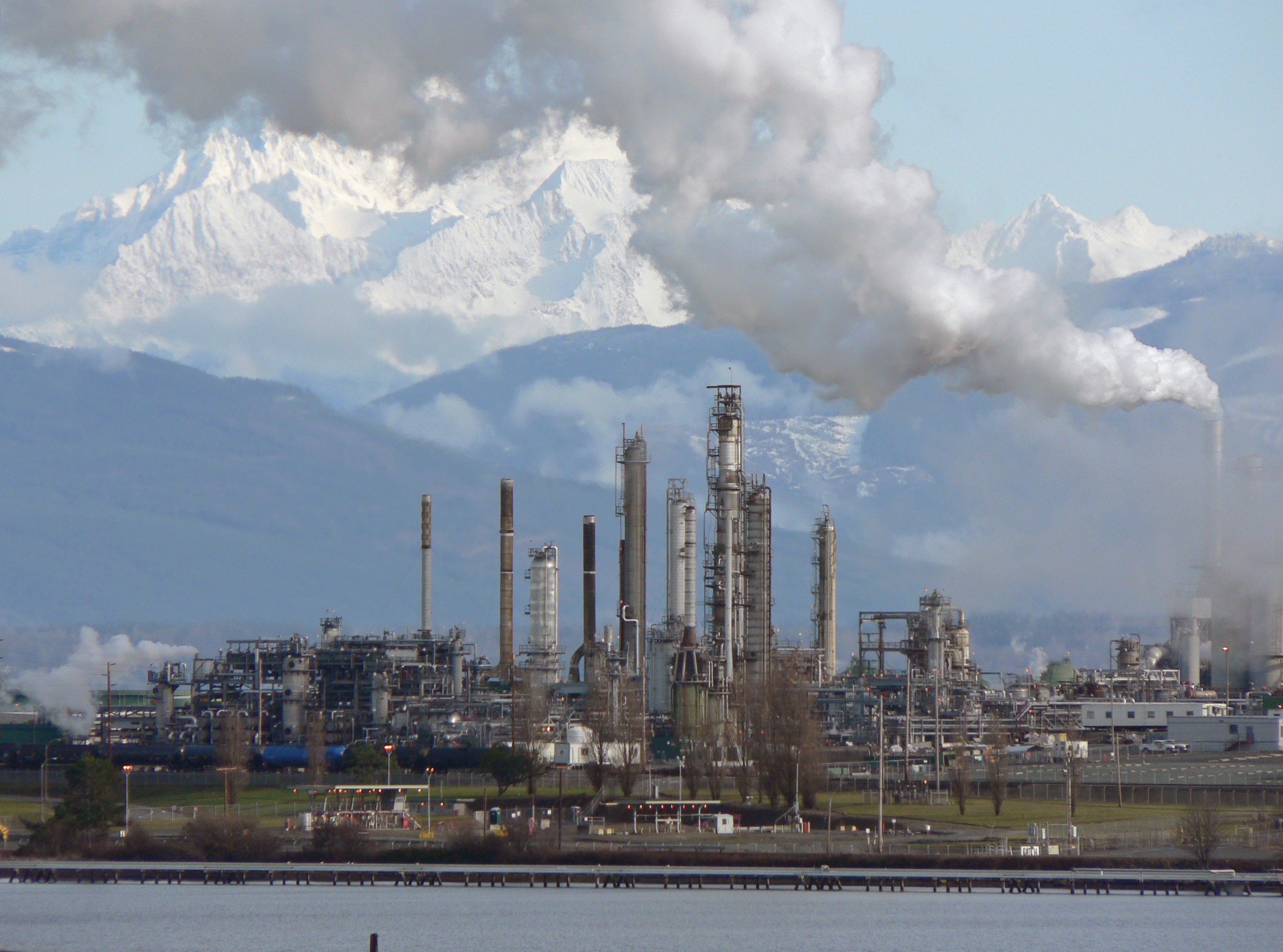
As we have associated good works with photosynthesis, we will associate the works of man with gasoline and petroleum-based fuel production. Just as photosynthesis produces sugars and carbohydrates that power living organisms, petroleum refinement produces the fuel necessary to power man-made objects such as automobiles and airplanes. Unlike the elegant, peaceful and clean process that plants use to process sunlight, water, and CO2 with incredible efficiency and virtually no undesired byproducts, the process of producing gasoline (while essential for our modern world) is dirty, wasteful, ugly, and dangerously volatile. Without going into the details, let it suffice to say that it involves wars over land, competitive exploration, exploitation of natural resources, inefficiencies, waste, and from an eternal perspective it is unsustainable. Similarly, while the works of man may seem mighty in the short term in comparison with simple acts of charity, in the grand scheme, the works of man, in contrast with the works of God, are infinitely puny.
Now we will contrast good works with the works of man. Good works are always performed with the intent to bless others, and to serve God (see Mosiah 2:17). On the other hand, the works of man are performed with the intent to get gain.
As we have associated good works with photosynthesis, we will associate the works of man with gasoline and petroleum-based fuel production. Just as photosynthesis produces sugars and carbohydrates that power living organisms, petroleum refinement produces the fuel necessary to power man-made objects such as automobiles and airplanes. Unlike the elegant, peaceful and clean process that plants use to process sunlight, water, and CO2 with incredible efficiency and virtually no undesired byproducts, the process of producing gasoline (while essential for our modern world) is dirty, wasteful, ugly, and dangerously volatile. Without going into the details, let it suffice to say that it involves wars over land, competitive exploration, exploitation of natural resources, inefficiencies, waste, and from an eternal perspective it is unsustainable. Similarly, while the works of man may seem mighty in the short term in comparison with simple acts of charity, in the grand scheme, the works of man, in contrast with the works of God, are infinitely puny.


Photosynthesis (left) represents Good works, or the works of God
Gasoline production (right) represents the works of man
Gasoline production (right) represents the works of man
Images from: